
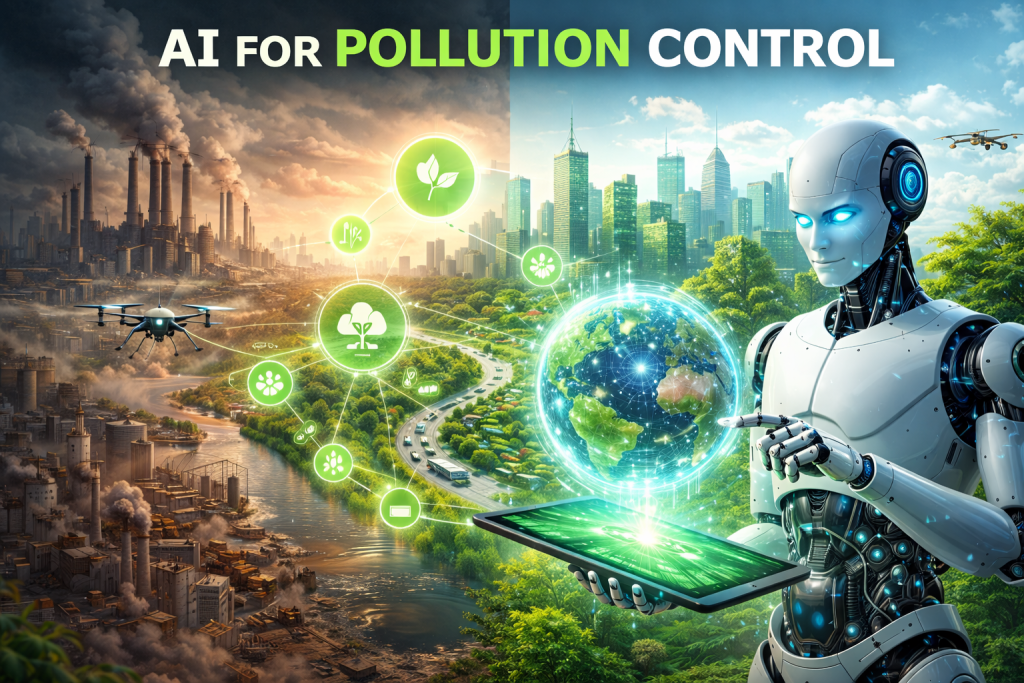
“The Role of Artificial Intelligence in Pollution Control: Paving the Way for a Sustainable Future”
Introduction
In today’s era of rapid technological advancement, environmental challenges are simultaneously escalating. Pollution, in its many forms—air, water, soil, and noise—has become a serious threat to human health, biodiversity, and entire ecosystems. Artificial Intelligence (AI) emerges as a powerful tool to monitor, analyze, and reduce pollution efficiently. By leveraging AI technologies, we can collect real-time environmental data, identify pollution sources, and implement strategies to mitigate their harmful effects. The integration of AI in environmental management is not just a futuristic idea but a present necessity, ensuring cleaner air, purer water, and healthier living conditions globally.
What is Pollution?
Pollution refers to the introduction of harmful substances or contaminants into the environment that adversely affect human health, wildlife, and natural resources. Modern pollution is no longer a localized problem; it has become a global concern. Air pollution leads to respiratory and cardiovascular diseases, water pollution contaminates drinking water and aquatic ecosystems, soil pollution affects fertile land and agriculture, and noise pollution has severe implications for mental health. Understanding these types of pollution is crucial for developing technological solutions, particularly through AI-driven methods, to monitor and minimize their impacts.
What is Artificial Intelligence (AI)?
Artificial Intelligence (AI) is the simulation of human intelligence in machines that are designed to think, learn, and make decisions. AI encompasses a wide range of technologies, including Machine Learning, Deep Learning, Computer Vision, Big Data Analytics, and Internet of Things (IoT) integration. These technologies allow machines to process large datasets, recognize patterns, and make informed decisions. In pollution control, AI’s importance lies in its ability to perform real-time monitoring, predictive analytics, and proactive intervention, which are essential for effective environmental management.
AI in Air Pollution Control
AI plays a pivotal role in monitoring and controlling air pollution. Smart sensors and satellite data can track air quality in real time, measuring pollutants such as CO₂, PM2.5, PM10, NOx, and SO₂. AI algorithms analyze traffic patterns, industrial emissions, and meteorological data to predict air quality levels and issue timely warnings. For instance, AI-powered traffic management systems help reduce congestion, thereby lowering vehicular emissions. Cities worldwide are implementing AI-based solutions to monitor pollution hotspots, providing authorities with actionable insights to protect public health.
AI in Water Pollution Management
Water pollution poses a critical threat to human health and aquatic ecosystems. AI-driven systems use sensors, cameras, and smart monitoring tools to detect contaminants such as chemicals, heavy metals, and microplastics in rivers, lakes, and oceans. Machine Learning algorithms analyze industrial discharge, agricultural runoff, and sewage data to predict pollution trends. AI can also optimize water treatment plants by automating processes to enhance purification efficiency, ensuring safer drinking water and healthier aquatic habitats.
AI in Industrial Pollution Control
Industries are significant contributors to environmental pollution, and AI offers innovative solutions to mitigate their impact. AI systems monitor operational processes to reduce energy consumption, minimize waste, and control emissions. Predictive analytics help identify potential pollution sources and prevent hazardous discharge before it occurs. By integrating AI into manufacturing, companies can achieve cost-effective and environmentally friendly production, reducing carbon footprints and complying with environmental regulations.
AI and Smart Cities
Smart Cities leverage AI to create sustainable urban environments. AI is used in intelligent waste management, smart street lighting, renewable energy distribution, and environmental monitoring. Sensors track air and noise pollution levels, and AI-based analytics help city planners make data-driven decisions. The integration of AI ensures optimized resource management, cleaner streets, and safer, healthier living conditions for residents.
AI in Agriculture
Agriculture is both a contributor to and victim of environmental pollution. AI technologies in agriculture help minimize the use of chemical fertilizers and pesticides, conserve water, monitor soil health, and optimize crop yield. Drones and smart sensors provide real-time data on field conditions, enabling farmers to make informed decisions. Precision farming powered by AI reduces land and water pollution while promoting sustainable agricultural practices, ensuring long-term food security and environmental protection.
AI and Climate Change
AI plays a crucial role in understanding and mitigating climate change. Machine Learning models analyze large-scale climate data to track global warming trends, melting ice caps, rising sea levels, and patterns of natural disasters. AI-driven simulations allow scientists and policymakers to predict environmental risks and design proactive mitigation strategies. By integrating AI into climate monitoring, we can develop adaptive solutions to safeguard vulnerable
communities and ecosystems.
Benefits of AI in Pollution Control
The benefits of AI in environmental management are vast. AI enables accurate real-time monitoring, predictive analysis, and cost-effective intervention strategies. It reduces human error, provides actionable insights, and supports long-term planning for sustainable development. Governments, industries, and urban planners can utilize AI to create effective policies and implement solutions that protect both human health and natural resources.
Challenges and Limitations of AI
Despite its potential, AI has certain limitations. High implementation costs, data privacy concerns, and technical dependency are significant challenges. Skilled professionals are required to develop, maintain, and interpret AI systems. Furthermore, AI models rely on the availability and quality of environmental data, which can vary across regions. Balancing technological advancement with ethical and environmental considerations is crucial for the effective deployment of AI solutions.
Conclusion
Artificial Intelligence has emerged as a revolutionary force in pollution control and environmental protection. By leveraging AI technologies in air, water, soil, and climate management, we can move towards a cleaner, healthier, and more sustainable world. Collaboration between governments, industries, and society is essential to harness AI’s potential ethically and efficiently. If implemented correctly, AI can provide innovative, real-time, and cost-effective solutions that ensure a greener planet for future generations.